The Complete Guide to Coating Additives: Selection, Chemistry, and Formulation
A senior formulator's reference to the ten functional additive families that determine whether a coating works in the lab, on the line, and in the field.
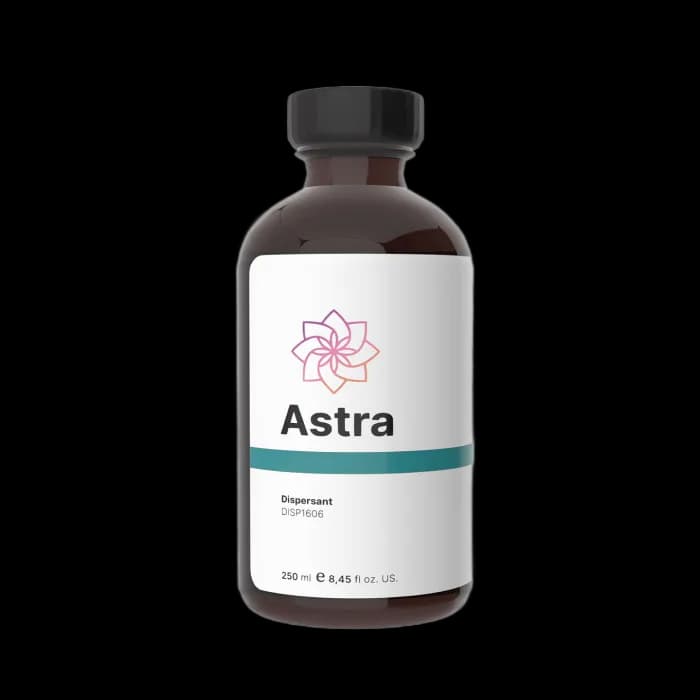
A senior formulator's reference to the ten functional additive families that determine whether a coating works in the lab, on the line, and in the field.
1. What coating additives are — and why a 0.3% dose can decide the whole project
A modern coating is a careful balance of four components: binder (resin), solvent or water, pigments and fillers, and additives. Additives typically make up 0.1–5% of the total formulation — yet they decide whether the paint:
- Disperses pigment properly or leaves visible aggregates
- Sprays without craters or builds orange peel
- Adheres to polypropylene or peels off in a tape test
- Stays stable for 12 months on a warehouse shelf or separates in the customer's drum
In our experience testing thousands of formulations, more than 70% of field complaints trace back to a single additive decision — usually the wrong dispersant, the wrong defoamer, or a rheology modifier that was never properly tested in the water-based system the formulator was actually building.
This guide covers the ten functional additive families every formulator should know. It is written for paint chemists, R&D managers, technical sales staff, and procurement teams who need a working reference rather than a marketing brochure.
2. The ten families at a glance
| # | Family | Primary function | Typical dosage | ASTRA line |
|---|---|---|---|---|
| 1 | Dispersants | Wet and stabilize pigments | 0.5–3% on pigment | ASTRA DISP® |
| 2 | Wetting agents | Lower surface tension (substrate + pigment) | 0.05–1% | ASTRA WA® |
| 3 | Defoamers | Eliminate air entrainment and microfoam | 0.1–1% | ASTRA DF® / DF NS® |
| 4 | Rheology modifiers | Control flow, sag, and settling | 0.1–2% | ASTRA REO® |
| 5 | Leveling agents | Smooth surface, prevent craters/orange peel | 0.05–1% | ASTRA LA® / LA NS® |
| 6 | Adhesion promoters | Bond coating to difficult substrates | 0.5–3% | ASTRA PA® |
| 7 | Functional additives | Catalysts, driers, coalescents, pH buffers | 0.1–2% | ASTRA F® |
| 8 | Reactive additives | Become part of the polymer network | 1–10% | ASTRA REACT® |
| 9 | Slip / scratch additives | Surface feel, abrasion, antiblock | 0.1–2% | ASTRA F® (slip line) |
| 10 | Specialty (UV absorber, HALS, antistatic) | Long-term durability | 0.5–2% | ASTRA F® (specialty) |
Total additive load in a finished coating typically runs 3–8% of the formulation — small in mass, large in impact.
Why 0.3% decides the project
A single 0.3% dose of the wrong additive can:
- Reduce color strength by 20% (wrong dispersant)
- Cause pinhole density above 10/cm² (wrong defoamer)
- Cut adhesion on polypropylene from 5B to 0B (missing silane)
- Drop gloss from 90 to 35 (poor pigment stabilization)
- Trigger cratering in 30% of spray-applied panels (wetting-defoamer antagonism)
The economic impact: a single production batch of 5,000 kg that fails field testing represents roughly $15,000–40,000 in direct material loss, plus customer trust damage that is harder to quantify. This is why the additive selection step deserves at least as much rigor as the binder selection — and usually more.
3. Dispersants: the foundation of every pigmented system
A dispersant's job is to replace air and moisture on the pigment surface with resin and solvent, then keep the primary particles separated during storage. Fail this step, and every downstream property — color strength, gloss, opacity, weatherability — suffers.
Two stabilization mechanisms
- Electrostatic (charge repulsion) — works in water, fails in solvent
- Steric (polymer chains physically separating particles) — works in both
Modern polymeric hyperdispersants provide both, which is why they have largely replaced classical polycarboxylates in high-performance water-based systems.
Selection by pigment type
| Pigment class | Recommended chemistry | Notes |
|---|---|---|
| Inorganic (TiO₂, iron oxides) | Polyether-modified, acidic groups | Strong adsorption on metal oxide surface |
| Organic (PB 15, PR 254, PY 139) | Polyurethane-type, basic groups | Smaller particle size → needs steric stabilization |
| Carbon black | High-molecular-weight polymeric | Carbon black is the hardest to disperse — requires high loadings |
| Effect pigments (aluminum, pearlescent) | Solvent-based, amine-neutralized | Avoid water in the dispersing stage |
| Matting agents (silica, wax) | Acidic groups for silica; non-polar for wax | Match polarity to surface energy |
ASTRA DISP® offers 97 grades covering every pigment/system combination. Key analogs include DISPERBYK-103/180/190, BYK-ATU, TEGO Dispers.
The adsorption isotherm: why 1:1 swaps fail
Every dispersant has a characteristic adsorption isotherm — a curve of how much dispersant the pigment surface can hold before saturation. Below the saturation point, dispersion is incomplete; above it, free dispersant migrates to the interface and can cause:
- Foam stabilization (in WB systems)
- Water sensitivity (poor wet adhesion)
- Intercoat adhesion failure
- Viscosity drift on storage
When you switch from one dispersant to another — even with the same active chemistry — the isotherm is usually different. The 1:1 swap almost never gives the same performance. Always test 3 dosages: 80%, 100%, 120% of the original load, and pick the one that gives minimum viscosity and best color strength. This single test saves more failed batches than any other.
Tip: When you switch from one dispersant to another, run an adsorption isotherm test — different chemistries require different optimal dosages. The "1:1 swap" rarely works.
4. Wetting agents: two different problems, two different chemistries
Many formulators confuse substrate wetting with pigment wetting. They are different problems requiring different solutions.
Substrate wetting
The coating must spread on the surface without crawling. For this, the liquid's surface tension must be 3–5 mN/m below the substrate's surface energy.
| Substrate | Surface energy (mN/m) | Wetting difficulty |
|---|---|---|
| Clean steel | 40–50 | Easy |
| Aluminum | 35–45 | Moderate |
| Treated wood | 30–40 | Moderate |
| Powder coating | 25–35 | Difficult |
| Polypropylene | 20–30 | Very difficult |
| PTFE | 15–20 | Extreme |
If your substrate is below 35 mN/m, you almost certainly need a substrate wetting agent.
Pigment wetting
In the dispersion stage, the wetting agent replaces air and moisture on the pigment surface so the dispersant can adsorb. Many modern products combine both functions.
Chemistry options:
- Polyether-modified polysiloxanes (silicone) — strongest surface tension reduction (18–22 mN/m)
- Fluorinated surfactants (15–18 mN/m) — for extreme cases, but regulatory pressure on PFAS is rising
- Non-ionic organic surfactants (EO/PO block copolymers) — economical, less effective on low-energy surfaces
ASTRA WA® offers 40 grades. Common analogs: BYK-349, TEGO Wet 270/280.
Critical: Always test the wetting agent + defoamer combination in water-based systems. Some pairs are antagonistic — the wetting agent stabilizes the very foam the defoamer is trying to break.
5. Defoamers: design for foam from day one
Foam is one of the most common and most expensive coating defects. It causes craters, pinholes, volume errors, and weak films. The mistake most formulators make is adding defoamer only after they see foam in the lab — by then it's too late.
Two-stage defoamer strategy
| Stage | Goal | Recommended addition |
|---|---|---|
| Pigment grinding | Prevent air entrapment during dispersion | 50% of total defoamer |
| Let-down | Eliminate microfoam introduced during let-down | 50% of total defoamer |
Silicone vs non-silicone
| Silicone (ASTRA DF®) | Non-silicone (ASTRA DF NS®) | |
|---|---|---|
| Efficiency | Very high | Moderate to high |
| Dosage | 0.05–0.5% | 0.2–1.5% |
| Recoatability risk | Yes if overdosed | Very low |
| Cost | Higher | Lower |
| Best for | Industrial, automotive, UV | Architectural, multilayer |
Always test defoamer in the actual application conditions — high-speed mixing, spraying, roller application. Lab screening rarely catches everything.
6. Rheology modifiers: where water-based and solvent-based logic diverge
Reology modifiers control flow, sag, leveling, settling, and film build. The same goal is achieved very differently in water and in solvent.
| Property | Solvent-based | Water-based |
|---|---|---|
| Main thickener | Organoclay, fumed silica | HEUR, HASE, ASE, cellulose |
| Sag resistance | Usually not critical | Critical — HEUR is best |
| Leveling | Relatively easy | Requires careful balance |
| pH sensitivity | None | High (HEUR/HASE work best at pH 7–9) |
ASTRA REO® offers 21 grades covering HEUR, HASE, ASE, organoclay, and wax-based thickeners.
Three rheology profiles you need to understand
| Profile | Behavior | Use case |
|---|---|---|
| Pseudoplastic | Viscosity drops under shear, recovers at rest | Spraying, brushing — most common |
| Thixotropic | Time-dependent recovery | Sag resistance on vertical surfaces |
| Newtonian | Constant viscosity | Inks, some clear coats |
Water-based systems almost always need pseudoplastic + thixotropic behavior to get both sprayability and sag resistance. HEUR modifiers give this combination cleanly; HASE gives pseudoplastic behavior economically but with less thixotropy.
Most common mistake: using an organoclay in a water-based system. The result is poor sag resistance, poor leveling, and viscosity drift. If you are moving from solvent to water, change your rheology strategy entirely.
7. Leveling and slip agents
Leveling agents reduce surface tension gradients in the wet film, allowing it to flow into a smooth, uniform surface before curing. They prevent:
- Orange peel (spray application)
- Brush marks (architectural coatings)
- Roller texture (wall paints)
- Sagging (high-build systems)
- Surface texture in UV-cured coatings
Three chemistry families
| Type | Surface tension | Strength | Weakness |
|---|---|---|---|
| Silicone (ASTRA LA®) | 20–22 mN/m | Strongest leveling, low dosage (0.05–0.3%) | Recoat risk if overdosed, can stabilize foam |
| Acrylic (ASTRA LA NS®) | 28–32 mN/m | No recoat issues, no foam stabilization | Less effective on low-energy substrates |
| Fluorinated | 15–18 mN/m | Lowest surface tension possible | PFAS regulatory pressure, high cost |
Common analogs: BYK-306, BYK-310, BYK-333, BYK-358, BYK-361N, TEGO Flow 300.
Slip vs leveling: leveling fixes surface flow; slip controls surface friction. They are often combined, but at the right ratio. Too much slip = recoat failure; too little = scratches and blocking.
8. Adhesion promoters
Every coating property — corrosion resistance, chemical resistance, weatherability — depends on adhesion. If the coating peels off, nothing else matters.
Adhesion promoters create a molecular bridge between the coating and the substrate, turning a weak physical bond into a strong chemical one.
Chemistry options
| Type | Best for | Notes |
|---|---|---|
| Organosilanes | Metals, glass, ceramics | Most versatile; hydrolyze in water — careful with WB |
| Titanates / zirconates | Broad substrate range | No hydrolysis needed; can also aid pigment dispersion |
| Phosphate esters | Steel, galvanized steel | Strong water resistance |
| Chlorinated polyolefins (CPO) | Polypropylene, automotive plastics | Specialized; expensive |
ASTRA PA® offers 18 grades covering all four chemistries.
Adhesion promoters complement, never replace, surface preparation. Even the best silane will fail on a contaminated substrate.
9. Functional additives: catalysts, driers, coalescents, pH buffers
Functional additives deliver specific performance properties the base resin cannot provide.
| Function | Product type | Typical loading |
|---|---|---|
| Curing catalyst | Organometallic complex | 0.1–0.5% |
| Alkyd drier | Cobalt, manganese, zirconium | 0.05–0.3% |
| Coalescent | Slow-evaporating solvent | 2–8% on resin solids |
| pH buffer | AMP-95, amines | 0.1–0.5% |
| UV absorber | Benzotriazole, triazine | 1–2% |
| HALS | Hindered amine | 0.5–1% |
| Antistatic | Quaternary ammonium | 0.5–2% |
| Waxes (slip, antiblock, scratch) | PE, PP, PTFE emulsions | 1–5% |
ASTRA F® offers 16 functional grades.
UV protection rule: always use UV absorber + HALS together. UV absorber blocks UV radiation; HALS neutralizes the free radicals that escape. Alone, neither is fully effective.
10. Reactive additives
Unlike conventional additives, reactive additives become part of the polymer network during cure. They modify the final film properties permanently, rather than remaining as a separate phase.
| Reactive group | Reacts with | Application |
|---|---|---|
| -OH (terminal) | Isocyanates (PU) | Flexibility, slip, weatherability |
| -NH₂ (terminal) | Epoxies, isocyanates | Toughness, solvent resistance |
| Epoxide (terminal) | Amines, anhydrides, carboxyls | Epoxy modification |
| Acrylate (terminal) | UV, peroxide cure | UV inks and coatings |
ASTRA REACT® offers 15 reactive grades.
Most common mistake: adding a non-reactive slip additive to a coating that will be recoated. The slip migrates to the surface and the next layer cannot bond. Use a reactive slip additive in multilayer systems.
11. Compatibility, dosing, and the seven formulation mistakes that cost the most
After testing thousands of formulations, we have identified the seven errors that account for the majority of field failures:
- Wrong dispersant type for the system (e.g., APEO-containing in modern WB, or solvent-style in WB)
- Defoamer added as an afterthought instead of designed into the formulation from day one
- Solvent-based rheology logic in a water-based system (organoclay in WB)
- Excess coalescent — wastes cost and raises VOC
- Acceptable grind quality — leaving Hegman 5 when Hegman 7 is achievable wastes 5–10% TiO₂
- No storage stability testing — clients discover the problem, not you
- Ignoring open time and film formation — especially in low-temperature application
Each of these is preventable with the right additive choice and a proper testing protocol.
12. Selection workflow: a four-step decision process
Use this for every new or revised formulation.
Step 1 — Define the system. Water-based, solvent-based, UV-cure, or 100% solids? This decision alone eliminates 50% of additive options.
Step 2 — Define the substrate. Metal, plastic, wood, mineral, previously painted? Determines whether you need an adhesion promoter and what chemistry.
Step 3 — Define the application. Spray, brush, roller, dip, coil, curtain? Determines rheology profile, defoamer choice, and leveling needs.
Step 4 — Define the failure modes. What is the most likely way this coating can fail? Cratering, sagging, delamination, blocking, haze, color drift? Map each failure mode to a specific additive family and test for it.
A 1:1 substitution from one supplier to another rarely works. Run a structured test:
- Lab screening (1–2 weeks): direct substitution ±20% dosage
- Pilot batch (1 week): 100–500 kg on standard, well-known formula
- Customer qualification (2–4 weeks): parallel testing or controlled switch
The ASTRA Chemical product range — 10 lines, 350+ SKUs — is designed to give you a drop-in alternative for every major additive used in modern coatings. Each grade is fully documented with TDS, SDS, regulatory data, and starting formulations.
13. Frequently asked questions
Q: What's the difference between a wetting agent and a dispersant? A: A wetting agent reduces surface tension to enable initial contact. A dispersant provides steric or electrostatic stabilization to keep particles separated after dispersion. Many modern products combine both functions.
Q: How do I know if I need a silicone or non-silicone defoamer? A: Use silicone (ASTRA DF®) for industrial, automotive, and UV systems where maximum efficiency matters. Use non-silicone (ASTRA DF NS®) for architectural and multilayer systems where recoatability and food-contact safety matter.
Q: Can I use the same dispersant in water-based and solvent-based systems? A: Rarely. Dispersant chemistry is system-specific: acidic groups work well on metal oxide pigments in WB; basic groups work better in solvent. ASTRA DISP® grades are clearly labeled for system compatibility.
Q: How do I test a new additive? A: Run three tests: (1) lab-scale direct substitution ±20% dosage, (2) pilot batch on a well-known formula, (3) accelerated storage stability (40°C / 30 days minimum).
Q: What dosage of adhesion promoter do I need? A: Typical 0.5–3% on total formulation, depending on the substrate and promoter chemistry. Always verify with cross-hatch adhesion after water soak (ASTM D3359, ISO 2409).
Q: How can I reduce VOC while maintaining performance? A: Switch to water-based, use reactive diluents (ASTRA REACT®) instead of solvent, optimize coalescent loading, and use HEUR rheology modifiers instead of solvent-thickened systems.
Q: Do you have equivalents to BYK, TEGO, Evonik, and Elementis products? A: Yes. Each ASTRA grade has documented analogs to the major Western suppliers. Contact our technical team for a cross-reference table and starting formulations.
Conclusion
A coating's performance is determined long before the spray gun touches the substrate — it is determined at the 0.1–5% additive level, in the chemistry decisions the formulator makes in the lab.
This guide covered the ten functional families every formulator should know: dispersants, wetting agents, defoamers, rheology modifiers, leveling agents, adhesion promoters, functional additives, reactive additives, slip additives, and specialty additives. Each addresses a specific problem; each requires a specific selection logic.
The four-step selection workflow — define system, define substrate, define application, define failure modes — gives you a repeatable framework that survives staff changes and supplier switches. Pair it with the three-stage testing protocol (lab screening, pilot batch, customer qualification) and you have a complete additive qualification process that will pay for itself many times over in reduced field failures and faster product development.
ASTRA Chemical offers more than 350 SKUs across 10 product lines, with full TDS, SDS, regulatory data, and starting formulations. Our R&D team supports direct substitution from any major Western additive supplier (BYK, Evonik TEGO, Elementis, Lubrizol, BASF, Shin-Etsu, Dow, Ashland). Whether you are reformulating for VOC compliance, switching suppliers to reduce cost, or developing a new water-based system from scratch, we can supply a drop-in alternative tested in our own lab and ready for your production.
Testing additives for this application?
Send us your current formulation challenge and our technical team will recommend an ASTRA product package for lab screening.